
America@250: The Legacy of Henrietta Lacks


Immortal Cells
The “HeLa” cell line is the oldest and most commonly used human cell line in scientific research. They were used to test the first polio vaccine, instrumental in eradicating Polio. HeLa genes were some of the first ever mapped, which helped create the Human Genome Project – the discovery that humans have 23 pairs of chromosomes.
This immortal cell line, so called because the cells never die, was the first ever cloned, used to create cancer medications, the HPV vaccine and technology for in vitro fertilization.
“HeLa” cells have been noted in at least 110,000 scientific publications and have become a cornerstone of modern medicine, enabling countless scientific and medical innovations.
An integral part of scientific research, HeLa cells have impacted virology, immunology, toxicology, microbiology, oncology, genomics, genetics, and more. Also, they were sent in the first space missions to determine effects on human cells in zero gravity.
Whose Cells Are These, Anyway?
These medical miracles were made possible by a Virginia woman whose cells were taken without her permission.
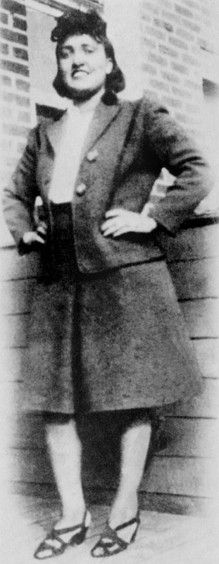
Her name is Henrietta Lacks.
In 1951, Henrietta Lacks, a 31-year-old Black woman and mother of five, was being treated for cervical cancer in a racially segregated ward at Maryland’s John Hopkins hospital. During her treatment, a white male doctor took samples from her tumor without her consent.
While most cell samples died shortly after being removed from a human body, Henrietta’s cells, called “HeLa,” a combination of her first and last name, not only survived but also thrived in laboratories. They became known as the first immortalized human cell line because scientists could cultivate them indefinitely. This meant researchers anywhere could reproduce studies using identical cells.
Once geneticist George Gey, the Johns Hopkins doctor who first cultivated the cells, made it known to his peers that Henrietta’s cells could replicate outside of her body – the first discovery of its kind – the cells were distributed to other researchers who simply asked.
The Death of Henrietta and the Birth of Genetic Medicine
Cervical cancer ultimately led to Henrietta’s death just a few months after her cells were removed. She was 31 years old. In 1953, two years after Henrietta’s death, HeLa cells lead to the discovery that humans have 23 pairs of chromosomes, and the birth of genetic medicine.
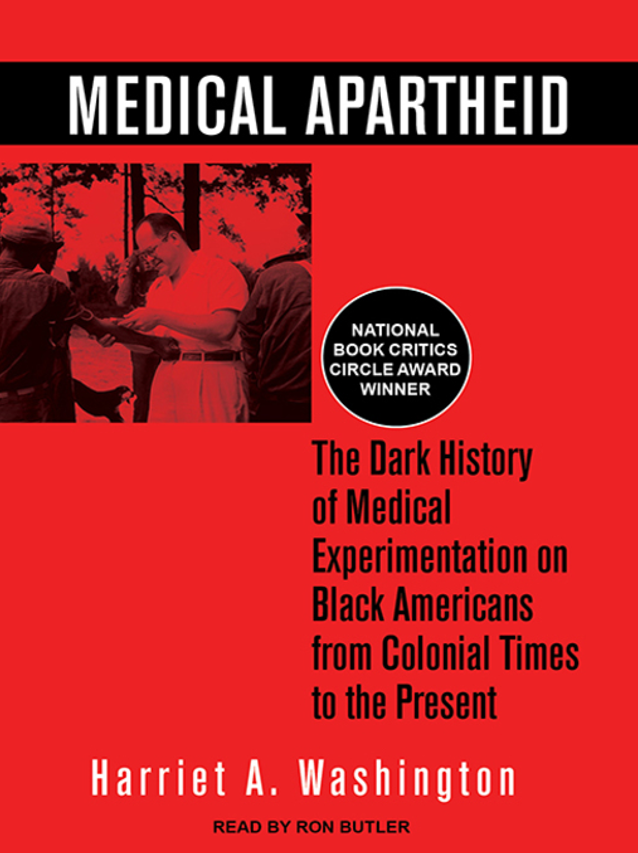
Henrietta Lacks’ experience was not unique. There are vast accounts of racial injustices in medicine such as the racial focus of the eugenics movement in the early 20th century, the policy failure of genetic testing for sickle cell screening in the 1970s, and the abuse of Black people in scientific research, including the Tuskegee experiments. There are still health disparities that exist today.

Henrietta’s family was never told about the biopsy, or the medical advancements made using HeLa cells.
Not only were Henrietta’s cells taken without her or her family’s consent, but a multibillion dollar industry also arose from them.
It was twenty-five years after Henrietta’s death, that her family found out that experiments were being conducted with her cells. And for decades, the family never saw any money from it.
◊ ◊ ◊
Many of the most important biotech companies that are now supplying and patenting genes and cells started off as small companies selling HeLa cells.
◊ ◊ ◊

Henrietta’s name entered the cultural spotlight after her life was documented in Rebecca Skloot’s 2010 biography, “The Immortal Life of Henrietta Lacks,” which was also made into a 2017 movie.

In a Harvard Online interview, author Rebecca Skloot shares that geneticist George Gey, along with scientists all around the world, had been trying to grow human cells outside the body for decades. And it never worked. They could survive a few days, maybe a few weeks, but they all died quickly.
For reasons that remained a mystery for decades, Henrietta’s cells never died. They quickly started exploding. They doubled their numbers every 24 hours. They went from two dishes to four to eight to 16 and quickly took over the lab. When George Gey realized this, he started calling peer scientists and saying, ‘I think I have the first immortal human cell line.’ This means they will grow and divide forever in the lab as long as you keep them warm, feed them and keep them clean.
In response, all of these scientists said, ‘great, can we have some?’ Gey said ‘yes.’
So, he would send these cells to other scientists, who would then grow them in their lab and give them to their friends, who’d give them to their friends. And Henrietta’s cells spread around the world this way, in a very inefficient system.
A Multibillion Dollar Industry is Born
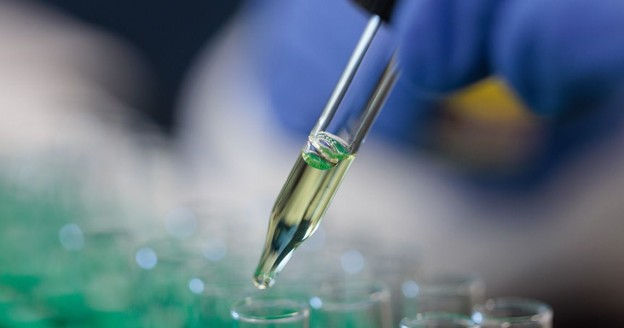
Facilities quickly started up for mass producing Henrietta’s cells. These companies house giant, industrial-size vats of cultured medium, which is what you feed cells as they travel on assembly lines preparing to be put into petri dishes. Henrietta’s cells were grown at a rate of about 6 trillion a week and sent to laboratories around the world.
◊ ◊ ◊
More than 11,000 patents have been developed using Henrietta’s cells, which have called attention to the commercialization of genetic research without a patient’s permission.
◊ ◊ ◊
Skloot tells the Harvard Online interviewer, “flash forward a few decades” to the 1970s when the Lacks family is approached by Harvard researchers wanting samples of DNA from Henrietta’s surviving family members. This sampling of the family’s DNA went on for years. Soon, scientists started hearing, someone has access to HeLa’s kids. Can I have samples of their cells and DNA, too?
Now Henrietta’s family’s cells were being sent out to scientists around the world, just like HeLa cells had. Her sons figured out that people were buying and selling their mother’s cells. In addition to the important science developed using them, venture capitalists also launched a worldwide multibillion dollar medical research industry.
Many of the most important biotech companies that are now supplying and patenting genes and cells started off as small companies selling the HeLa line.
Recognition and Justice
When Henrietta’s sons found out, they started saying, if people are buying and selling our mother’s cells, where’s our cut? And if our mother’s cells were so important to medicine, why can’t we go to the doctor? Why don’t we get access to the medical care that her cells helped create? And no one had a good answer to that question for them. Skloot said, “that went on for decades.”
◊ ◊ ◊
Henrietta’s cells were grown at a rate of about 6 trillion a week and sent to laboratories around the world.
◊ ◊ ◊

In 2023, more than 70 years after doctors at Johns Hopkins Hospital took Henrietta Lacks’ cervical cells without her knowledge, attorney Ben Crump representing her descendants said they have reached a settlement with a biotechnology company they sued in 2021, accusing its leaders of profiting billions of dollars from a racist medical system.

Ben Crump continues to represent Henrietta Lacks descendants in an ongoing series of lawsuits filed against biotech companies that include holding countless patents. Three of those lawsuits have been settled for undisclosed amounts to the Lacks family: 1) Thermo Fischer 2) Novartis and 3) Viatris.
Thermo Fischer August 2023
Lacks’ living relatives reached a history-making settlement with Thermo Fisher Scientific, a Massachusetts-based biotech company worth more than $216 billion. The settlement agreement came after closed-door negotiations that lasted all day inside the federal courthouse in Baltimore. Several members of the Lacks family were in on the talks.
Thermo Fischer and the Lacks family also resolved a two-year-old “unjust enrichment” lawsuit in another undisclosed agreement.
Attorney Ben Crump, who represents the Lacks family, announced the settlement in a statement. “The parties are pleased that they were able to find a way to resolve this matter outside of Court and will have no further comment about the settlement.”
Novartis, February 2026
Switzerland-based company Novartis is the second biopharma company to reach a settlement with the Lacks estate. The agreement ends litigation between Novartis and the estate of Henrietta Lacks, which filed a lawsuit in federal court in Baltimore against Novartis and Viatris in August 2024. The family was seeking a jury trial and the “full amount” of profits obtained through the companies’ use of the “stolen” cells, according to the complaint.
“Members of the family of Henrietta Lacks and Novartis are pleased they were able to find a way to resolve this matter filed by Henrietta Lacks’ Estate outside of court,” the parties wrote in a statement, adding that they “have no further comment on the settlement.”
Viatris, March 2026
The family of Henrietta Lacks settled its lawsuit against Pennsylvania-based generic drugmaker Viatris, ending another legal fight over the use of Lacks’ cells taken without her consent. The settlement is part of a series of legal actions by Lacks’ estate seeking compensation for the use of her cells without consent.
Ultragenyx Pharmaceutical, Ongoing and Active
A week after the estate settled the case with Thermo Fisher Scientific in 2023, attorneys for the family filed a lawsuit against California-based, rare disease specialist Ultragenyx Pharmaceutical in Baltimore federal court. Litigation with Ultragenyx, another drugmaker accused of profiting from a racist medical system, remains active. The lawsuit accuses Ultragenyx of profiting unlawfully from cells taken from Lacks without her consent more than 70 years ago. The estate alleges the company made a “fortune” by using Lacks’ cells as a “factory” to make its gene therapy products.
Ultragenyx treats Lacks’ cells “like a dairy farm treats cows,” milking them for AAV vectors to “sell as chattel” and using Lacks’ body as a “mere manufacturing tool.”
The Estate of Henrietta Lacks
“While it was not known for decades to medical researchers outside Johns Hopkins that HeLa cells were Mrs. Lacks’s cells…it was well understood within the scientific community that the cell line was the product of non-therapeutic medical experimentation on Black patients by physicians at John Hopkins,” attorneys for the Lacks estate, explained.
The estate’s main contention against Ultragenyx hinges on the company’s production of adeno-associated virus (AAV) vectors for gene therapies. Ultragenyx has positioned AAV-based gene therapy as a “central pillar” of its business, while its “purported competitive advantage is the theft of Mrs. Lacks’s cells commercialized for profit at a massive scale.”
Specifically, Ultragenyx is being asked to forfeit “the full amount of its net profits obtained by commercializing the HeLa cell line” to Lacks’ descendants. The estate also seeks a permanent enjoinder against future use of Lacks’ cells “without the permission of the Estate.”
A theme throughout the legal complaints, the Lacks’ grandchildren and other descendants argued that Henrietta’s treatment illustrates a much larger issue that persists into the present day: racism inside the American medical system.
◊ ◊ ◊
Henrietta’s Legacy

Johns Hopkins University and Johns Hopkins Medicine, together with descendants of Henrietta Lacks, broke ground in 2022 on the future site of the new 34,000-square-foot building named in honor of Mrs. Lacks.
Johns Hopkins said it never sold or profited from HeLa cells, though international companies and other research organizations have developed tens of thousands of patents using HeLa cells.




◊ ◊ ◊

A statue of Henrietta Lacks, which was commissioned by the University of Bristol, is the first public sculpture of a Black woman made by a Black woman in the United Kingdom. Bristol artist Helen Wilson-Roe created the life-sized bronze statue of Henrietta Lacks whose cancer cells changed the course of modern medicine.
◊ ◊ ◊


